
Pterophyllum scalare - Freshwater Angelfish
 By: Nic Paquette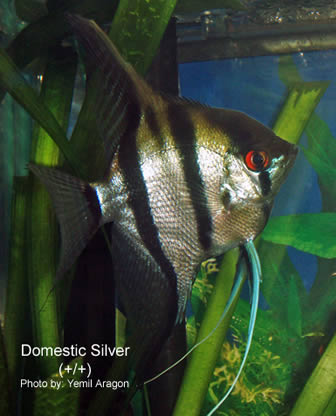
Species Name: Pterophyllum scalare
Common Names: Angelfish, Freshwater Angelfish
Synonyms:
Family: Cichlidae
Order: Perciformes
Class: Actinopterygii
Max Size: 7.6 cm / 3 inches
Environment: Freshwater
Origin: Pterophyllum scalare originates in South America, particularly in the Amazon River and Amazon River basin areas.
Temperament: Pterophyllum scalare can have a range of temperaments. Overall, however they are typically reasonably sociable fish that get along with appropriate tank mates. They can sometimes have an aggressive streak, especially if they are mating.
Company: Pterophyllum scalare can be housed in community tank with most medium to large, mild to mid-tempered fish. Some common tank mates include mollies, platys, silver dollars, rams, Bristlenose Plecos, and Corys. If possible, try to avoid keeping smaller fish, such as neon tetras or guppies, with Pterophyllum Scalare. As the fish gets larger they can, and often will, eat any fish they can fit into their mouths. Multiple Pterophyllum scalare can be kept in the same tank, as long as it is large enough.
Water Parameters: pH 6.0-8.0, temperature 26.6 ° C / 80 ° F
Aquarium Setup: Pterophyllum scalare can tolerate just about any type of aquarium setup, from bare bottom to heavily planted. The fish. however. do best in a medium to heavily planted aquarium with a good amount of room to swim around. A good water flow from the filter is also preferred as it gives the fish better looking fins. For best growth and health Pterophyllum scalare typically prefer 10-15 gallons per fish.
Feeding: Pterophyllum scalare are omnivorous fish and prefer a wide variety in their diet. A good mix of high quality flake food, mixed with brine shrimp, bloodworms and/or ground algae pellets keeps them very happy. Live blood worms can also be fed as a treat.
Breeding: Breeding Pterophyllum scalare is quite common. Once a pair is established, place them into their own tank (so they don't attack any of their tank mates). Pterophyllum scalare will typically lay their eggs on any flat surface; a piece of slate is typically used by most breeders, although large plant leaves and even the aquarium glass is not uncommon. In some cases the parents will raise the fry themselves. Other times however it is best to move the eggs into a hatchery. In either case, once eggs are laid, a daily 30-50% water change is preferred to keep the fry healthy. Three to four days after being laid, the tails of the fry will develop, at which point they are called 'wrigglers'. At day 7-8 after laying. the fry will become free swimming. Because Pterophyllum scalare fry have a large yolk sac they will not require food for 2-3 days after they become free swimming. When it comes time to feed the fry, live baby brine shrimp are a common food. Alternatively, ultra fine flake food can be used although it is typically less effective. As the fry get older, they will slowly graduate to the full flake that the parents eat.